
Cotton Vs Jute: Find the Key Differences
Last updated on January 8th, 2026 at 01:44 pm
Cotton is the most used natural cellulose fibre on earth, and jute is the second most used natural cellulose fibre. Production levels of cotton and jute are the same. Both are water-absorbent and biodegradable fibres. Both fibres are also breathable. India is the largest producing country of cotton, and Bangladesh is the largest producing country of jute. Though both of the fibres have similarities, we will discuss the dissimilarities in this article.
Cotton
Cotton is a pure cellulose staple fibre that grows around the seeds in the boll of the cotton plant. Nearly 30% of the total fibre consumption on earth is cotton. It can be harvested both by manual and by machine methods. Previously it was harvested by hand by the farmers, but nowadays it is harvested by mechanical methods. It grows well in warm weather.
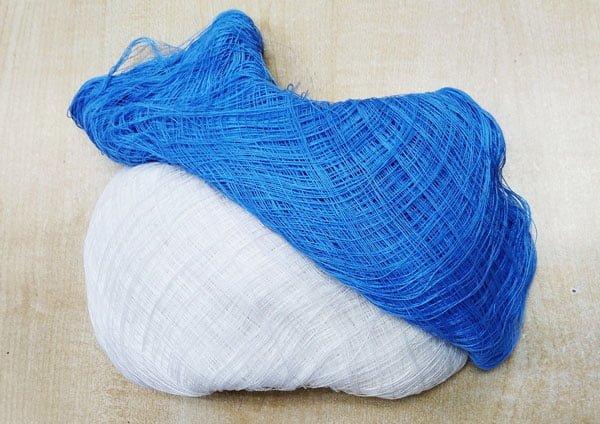
The fibre is spun into yarns, and the yarns are woven or knitted into breathable textile fabrics. These fabrics are used to make clothing, towels, mats, bags, home textiles, socks, underwear, fishing nets, etc. Products made from cotton are comfortable to wear and resistant to static electricity.
Jute
It is a natural and one of the strongest fibres. It is also the cheapest among all the fibres. Like hemp and flax, it is a bast fibre. The jute plant grows well in the tropical countries like Bangladesh and India. Jute fibre is obtained from the bark of the jute plant. It is cultivated traditionally, and its cultivation is in similar conditions to organic farming.
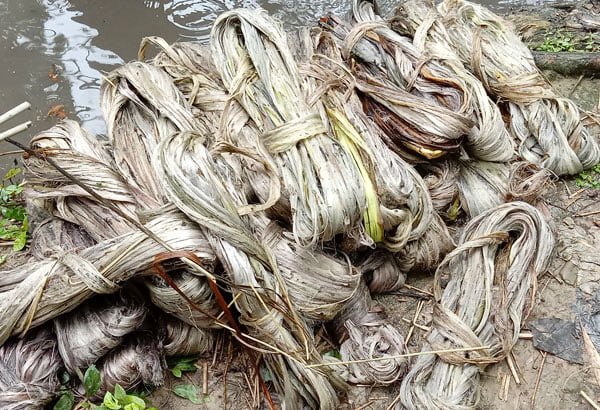
Little jute plants can be eaten as vegetables. It is used to make curtains, paper, shoes, carpet backing, backing cloth, sacks, lounge chairs, lunch bags, heavy ropes, etc. It can also be blended with cotton to make premium-quality products like shirts, trousers, coats and other forms of clothing.
Differences between Cotton and Jute
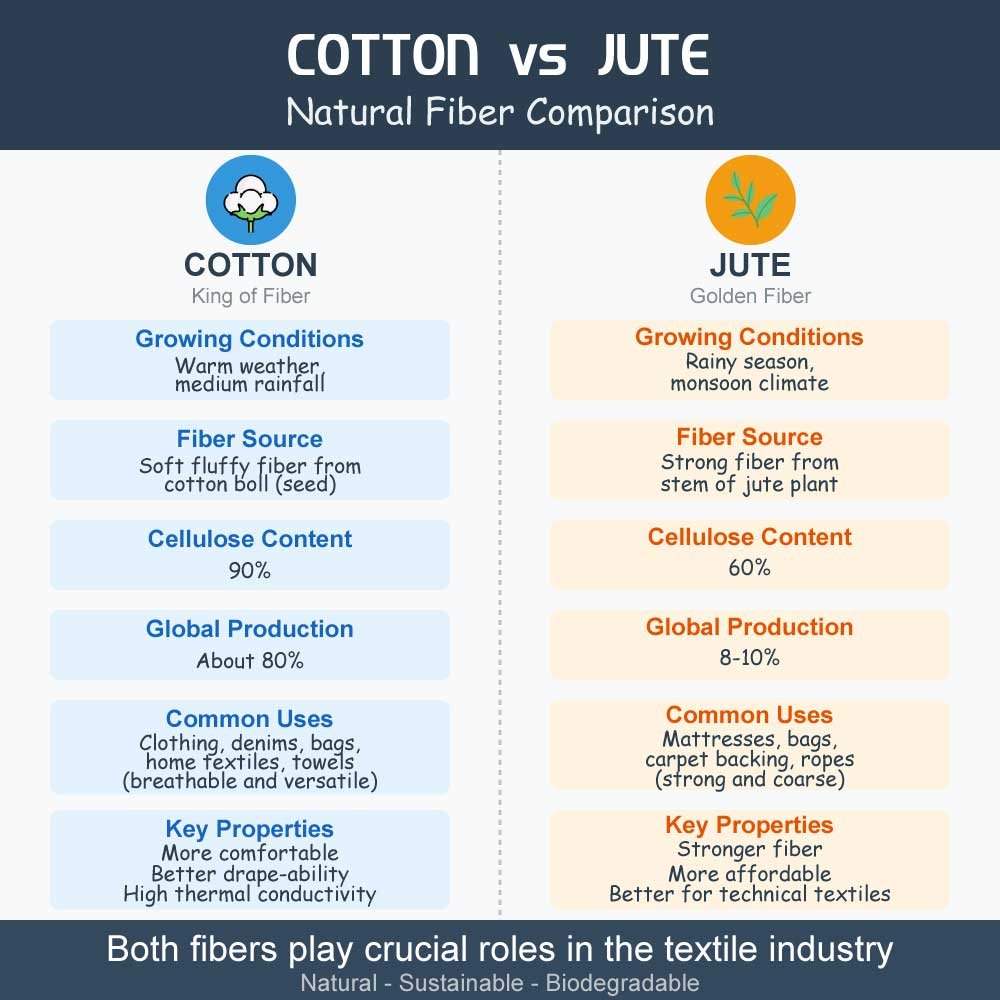
- Cotton grows well in warm weather and requires medium rainfall. Jute grows in the rainy season.
- Jute fibre is cheaper than cotton.
- Cotton is a soft and fluffy fibre that grows in the form of a boll, which is known as a cotton ball. Jute fibre is obtained from the stem of the jute plant.
- Cotton has 90% cellulose, and jute has 60% cellulose.
- Jute fibre is stronger than cotton fibre.
- Cotton makes up nearly 80% of the total natural fibre produced. On the other hand, jute makes up about 8% to 10% of total natural fibre produced.
- When flowers grow in cotton plants, they look like yellowish-white colours, which turn into red colours after some days and gradually the flowers change into cotton balls. On the other hand, the jute plant grows to about 3 metres in length and gives yellow flowers within a few months, and then the plant is cut down for further processing.
- Cotton is versatile in uses. First it is spun into lightweight yarns, and the yarns are woven or knitted into breathable and stunning fabrics, and the yarns or fabrics are used to make durable clothing, denims, bags, home textiles, towels, etc. On the other hand, jute is a shiny plant which is used to make coarser and strong yarns. The yarns are used to make mattresses, bags, carpet backing, etc.
- Cotton has great thermal conductivity and anti-static properties, and jute has low thermal conductivity and anti-static properties.
- Jute is a better choice to make technical textiles compared to cotton.
- Cotton fibre can be white, creamy white, yellowish white or grey coloured. On the other hand, jute fibre can be white, off-white, yellow, brown, grey or golden in colour.
- Cotton is the king of fibre, and jute is the golden fibre.
- Cotton is more comfortable than jute for wearable products.
- Cotton has better drapeability than jute.
You also like:
Informative article.
Thanks for sharing.
I didn't know about the difference.
Thanks for sharing.
Informative comparison…
Thanks.
Good comparison.
Thanks
Most Welcome
Thanks
Thanks
Do you mind if I quote a couple of your posts as long as I provide credit and sources back to your blog? My blog is in the same niche as yours, and my users would benefit from some of the information you provide here. Please let me know if this ok with you. Thank you.