What is Material-to-Liquor Ratio (MLR) in Textile Dyeing?
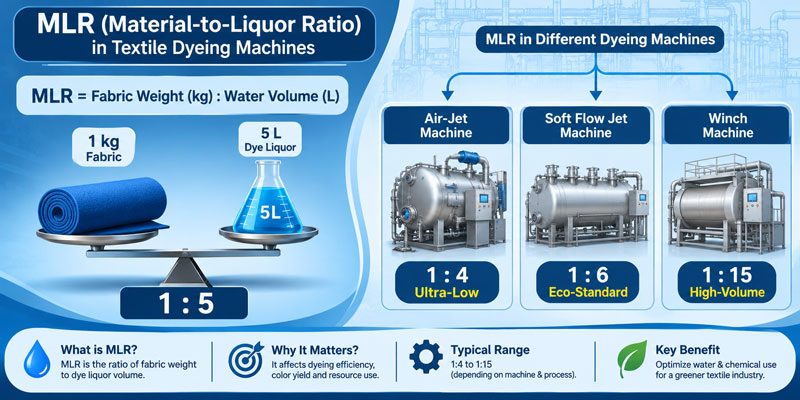
Material-to-liquor ratio is the weight of fabric compared to the volume of water in the dye bath. It is written as 1:10, 1:8 or 1:5. The first number is the fabric. The second number is the liquor.
A 1:10 ratio means one kilogram of fabric needs ten litres of liquor. That is it. Simple, but powerful.
Every dyehouse uses MLR. It sets your water use, chemical use and steam demand. It also affects how evenly the dye goes into the fibre. Get it wrong, and you get patchy shades or wasted money.
The MLR Formula: How to Calculate Dye Bath Volume Manually
The math is easy. You only need the dry fabric weight and the ratio.
Basic formulas
- Bath volume (L) = Fabric weight (kg) × Liquor ratio
- Dye (g) = Fabric weight (kg) × 1000 × Shade % ÷ 100
- Chemical (g) = Concentration (g/L) × Bath volume (L)
Worked example
You have 50 kg of cotton. The ratio is 1:10. The shade is 2% owf. Salt is 60 g/L.
- Bath volume = 50 × 10 = 500 L
- Dye = 50 × 1000 × 2 ÷ 100 = 1,000 g
- Salt = 60 × 500 = 30,000 g, or 30 kg
Quick tip
Always use dry fabric weight. Convert pounds and ounces to kilograms first. This calculator does that for you.
Standard MLR Guidelines for Different Fabrics and Dyeing Machines
The right ratio depends on the machine and the fabric. These are common starting points. Always confirm with your machine supplier.
By machine
- Jigger and winch: 1:3 to 1:8
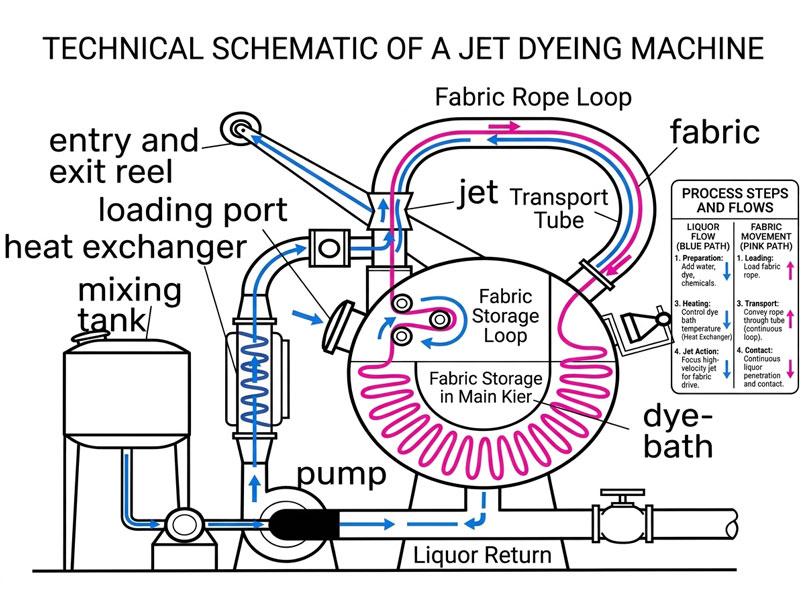
- Soft-flow and jet: 1:5 to 1:10
- Overflow: 1:6 to 1:10
- Beam dyeing: 1:8 to 1:12
- Package and hank dyeing: 1:8 to 1:15
- Lab dip machines: 1:10 to 1:20
By fabric
Cotton knits often run at 1:8 to 1:10. Polyester needs about 1:6 to 1:10. Wool and delicate blends prefer a higher ratio for gentle movement. Heavy fabrics hold more water, so check circulation before you cut the liquor.
Remember
Reactive dyes on cotton use a lot of salt. A lower ratio cuts the salt per kilogram of fabric.
Why Optimizing Your Liquor Ratio Matters (Cost & Sustainability)
Liquor is expensive. You pay for the water. You pay to heat it. You pay to treat it afterwards.
Going from 1:10 to 1:6 cuts water by 40%. Heating energy drops too. Chemicals scale with volume, so salt and alkali costs fall as well.
Cost savings
Less water means lower steam use, lower chemical use and shorter cycle times. Over a year, that adds up fast.
Sustainability
Textile dyeing uses huge amounts of water. A lower ratio means less effluent. It also reduces your load on the treatment plant and helps meet buyer and regulatory targets.
Do not go too low
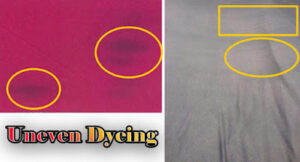
If the ratio is too low, the fabric cannot move freely. You may see creases, uneven dyeing or poor levelling. Find the lowest ratio your machine handles well.
Advantages of Using Liquor Ratio (MLR) Calculator
Manual math takes time. Mistakes happen, especially with mixed units. This tool fixes both.
- Fast: Get bath volume, dye and chemicals in one click.
- Accurate: Fewer errors than a pencil and scrap paper.
- International: Switch between kg, g, lb, oz, litres and gallons.
- Flexible: Choose a standard ratio or enter your own.
- Shareable: Copy or share results with your team in seconds.
- Free and mobile friendly: Use it on the shop floor or in the lab.
Use it to plan recipes, check costs and train new operators. Always run a trial before bulk production.
Frequently Asked Questions
What does a 1:10 liquor ratio mean?
It means 10 litres of liquor for every 1 kg of dry fabric. For 20 kg of fabric, you need 200 litres.
Why is the Material-to-Liquor Ratio (MLR) so important in dyeing?
It controls dye uptake, shade evenness, and water, energy and chemical use. It also changes cost and effluent load.
What is the difference between a low liquor ratio and a high liquor ratio?
A low ratio (like 1:5) uses less water and chemicals but needs good machine circulation. A high ratio (like 1:20) moves fabric easily but costs more and creates more waste.
Does fabric weight change after it gets wet?
Yes, wet fabric weighs more. But MLR always uses the dry fabric weight, so weigh it before it goes in the bath.
How do I calculate the exact amount of salt or chemicals needed based on MLR?
First find the bath volume: fabric weight (kg) × ratio. Then multiply by the recipe in g/L. For 500 L at 60 g/L, you need 30,000 g of salt.
You also like different types of textile chemicals