
Fabric Tensile Test Standards: ISO 13934 Vs ASTM D5034 Vs ASTM D5035
Introduction to Fabric Tensile Test and International Standards
You wear your favorite denim to feel confident when you go outside. Denim gives good resistance to wear and tear. Its tensile strength is so good.
Not only denim, woven fabrics should have good tensile strength. So, tensile strength testing is an important property followed by the retailers. All the retailers have their own quality guidelines. They have their own requirements for tensile strength based on fabric type & weight.
Suppose, a denim fabric has GSM from 5.0 to 7.0 oz, its tensile strength requirements will be 35 x 25 lbs. So, it plays an important role to ensure the product quality as well as material evaluation.
When the garment manufacturers make garment samples, they check the fabric testing report. If the fabric tensile strength is up to the mark with other requirements, they go next. So, it helps to keep the international trade flowing smoothly.
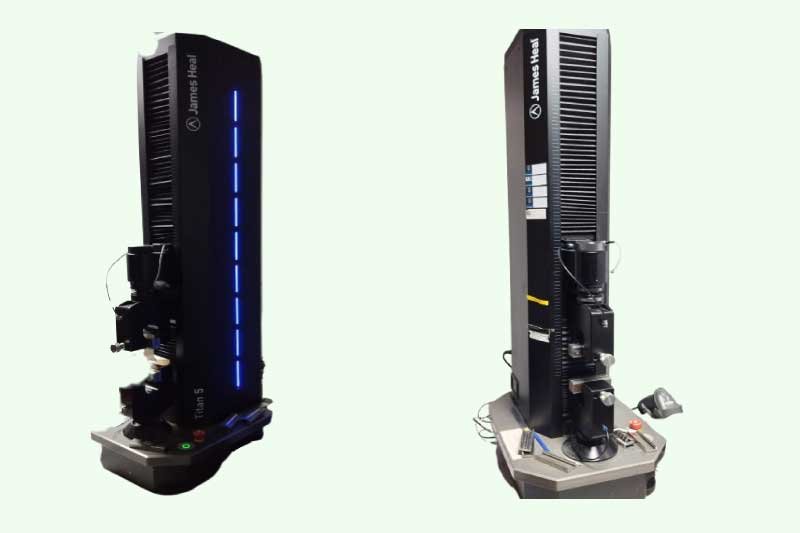
Different types of textile testing methods are available to check the fabric quality. Physical testing, color fastness testing, dimensional stability testing, chemical testing etc. are available.
Besides, flammability testing, fiber composition testing, appearance after washing testing etc. available. All these tests also help to ensure the fabric quality testing.
Among them, physical testing plays an important role for performance quality checking. Tear, tensile, seam strength, stretch properties, GSM, yarn counts etc. are physical testing. So, tensile strength checking is also important.
There are many international test methods to check tensile strength of textile & clothing. Among them ISO 13934, ASTM D5034 and ASTM D5035 used most. Most of the retailer brands follow these standards.
Though all these methods used for tensile strength, there are some systematic differences. In this article, we will know about the comparison of ISO 13934, ASTM D5034, and ASTM D5035.
ISO 13934 is an international test method for checking fabric tensile strength. The buyers from Europe or England use this test method for their product quality. There are two parts in this method. They are ISO 13934-1 and ISO 13934-2. Both of these are same but differ in testing process and scope.
ISO 13934-1 uses strip method and ISO 13934-2 uses grab method. Both of these methods are applicable to woven fabrics. Fabrics having stretch properties like elastomeric fabrics are also applicable. Special mechanical or chemical treated fabrics are also in the scope of this test method. But fabrics like geo, non-woven, coated, glass fiber, or carbon fiber are not applicable.
ASTM D5034 is an American test method. American retailers recommend this test method to maintain their product quality. This test method is also accepted worldwide. This is a grab test.
This test method is applicable for both woven and non-woven fabrics. But it is not applicable for knitted fabrics.
ASTM D5035 is also an American standard. The American retailers sometimes recommend this test standard depending on some specific requirements. This is a strip test.
In this test method, a fabric strip cut and a fixed amount of slit done. Then the specimen clamped in a tensile testing machine. The machine operated till the specimen breaks. The test result shows breaking force and elongation.
Theoretical Framework of Fabric Tensile Strength Test
Definition of key terms:
Now we will know about some definitions as bellow:
Tensile Strength
Tensile strength is the breaking strength adjusted for the width of a fabric. It expresses the force per unit width. Such as Newtons per centimeter (N/cm) or pounds-force per inch (lbf/in).
Breaking Force
Breaking force is the ultimate force required at the moment when a fabric ruptures. It is also known as the peak force on the graph before any material fails. Newtons (N) or pounds-force (lbf) are the units of breaking force.
Elongation at Break
It is the fabric’s ability to stretch. Elongation at break is the increase in length of a specimen at the point it breaks. It indicates the elasticity and ductility of a material. Percentage is the unit of elongation at break. The higher the percentage, the higher the fabric is stretchy. If the percentage is low, the fabric is rigid.
Factors Affecting Tensile Properties
There are different types of textile fiber available in the market. We can source it from the nature. It can also be sourced from artificial sources. Artificial fibers give more strength than natural fibers. Like polyester, nylon or acetate fibers give better strength than cotton or linen. But, some natural fibers like silk or sisal give more strength.
Besides fiber type, fiber length and fineness also affects the tensile strength. The longer the fiber length in yarn, the better the tensile strength.
Now it comes to yarn structure. Different types of yarn like ring yarn, rotor yarn, filament yarn etc. available. Ring yarn gives better strength than rotor yarn. And filament yarn gives better strength than ring yarn.
It also depends on the fabric structure and design. Fabrics having compacted structure with high density of yarn gives higher tensile strength. Fabric structures like twill or satin gives better tensile strength than plain weave.
Some chemical treatments like resin finishing bonds fibers together. It helps to improve fabric’s tensile strength.
So, tensile test is equally important for apparel, home textiles, and technical textiles.
ISO 13934 Standard in Fabric Tensile Test (Strip Method and Grab Method)
There are two parts under ISO 13934, Part-1 and Part-2. The Part-1 is strip method and Part-2 is grabbing method. These methods are applicable for woven fabrics. But fiber-glass, geo-textiles, non-woven, coated fabrics etc. are excluded.
We need to prepare five specimens in warp direction and five specimens in weft direction. The size of the test specimens will be 60 mm X 300 mm +/- 2 mm.
There are many advantages of ISO 13934-1 test method. This is a standard and precise test method. CRE (Constant-rate-of-extension) Class 1 machine is used in this testing procedure. So, there is limited chance of tested data fluctuation.
Now we will know about the sample clamping technique of ISO 13934-2. At first we need to set the specimen in the top jaw. Then we will align the 38 mm line to one edge of the gripping area. This will ensure that, the specimen is mounted centrally. Then we will close the top jaw.
Now we will allow the specimen to hang freely under its own weight. It will help to avoid any pre-tension or slack. Then, we will align the 38 mm line to one edge of the gripping area of the bottom jaw. Finally, we will close the bottom jaw. Now, we will start the cross head and run until the specimen breaks. Or, the required strength is exceeded.
The most European retailers accept tensile strength of >500N (50kg) as satisfactory. So, the tensile strength helps for global trade and certification.
ASTM D5034: Fabric Tensile Test Using the Grab Method
ASTM D5034 is a grab test. It determines the breaking strength and elongation of textile fabrics. This test method applicable to any kind of woven, nonwoven, and felted fabric. But this test method is not applied for knitted fabrics.
Equipment requirements:
- To perform this test CRE (constant rate of extension) machine is required. The operating speed is of 300 ± 10 mm/min.
- The jaw face should be smooth and flat. It should have a metallic or gripped surface. The faces should stay in parallel position.
- It should have pneumatic rubber faced jaws (rear and front jaws = 75x25mm). It should have same centers compared to one another in the same clamp. Additionally, to the corresponding jaw face of the other clamp.
- Calibrated 300mm ruler.
Step-by-step testing procedure:
- Use the 75mm x 25mm rubber faced clamps on the front and rear jaws.
- The specimen is set such a way that the longer direction of the specimen is tested.
- The clamping area should be one inch. The correct jaws must be in place and the gauge length set to 200mm. Use a calibrated metal ruler.
- The air pressure should be adjusted to prevent any slippage at the jaws when testing.
- Then the lower side of the specimen is placed to the lower clamp. Ensure that they are central and straight.
- The machine should be operated following the manufacturer’s guideline.
- If the machine is software based, select the accurate program to run.
- The testing speed is 100mm per minute.
- Software based machine will return original position if the fabric exhibits initial rupture.
ASTM D5034 is applicable for breaking strength and elongation of textile fabrics. ISO 13934-2 is applicable for maximum force and elongation of textile fabrics.
Both of these test methods, the gauge length helps to grip the central part of the specimen. The testing specimen stretched at a constant rate until it breaks or rupture. It ensures the quick and effective fabric strength testing.
Both of these test methods are not applicable for knitted fabrics. For high stretchy fabrics, these methods are also not applicable.
Industrial applications:
The grab test method is widely used in apparel industry quality control. As the central part of the specimen tested, it gives ideal testing result. Also, this test method ensures accuracy and reliability of testing results.
ASTM D5035: Fabric Tensile Test Using the Strip Method
ASTM D5035 helps to measure breaking strength and stretch of woven fabrics. This process uses strip method. In this method, specimen strips are clamped in the jaw. The CRE machine then started and force applied until the specimen breaks.
This test method determines two parameters. First one is the maximum force that a fabric can withstand. The second one is the stretch % at that breaking point. It provides a standard procedure that gives consistent and comparable fabric strength.
ASTM D5035 and ISO 13934-1 are similar strip test methods according to process. But, primarily differ in jaw length. In ASTM D5035, the jaw length is wider than the fabric strip. This design helps to clamp the entire strip. But in ISO 13934-1 method the jaw length is as wider as the width of the fabric specimen. This design helps to apply a constant rate of extension to the fabric strip.
These test methods mechanize the repeatability and reliability of the strip process. The strip process determines the strength and elongation at break of a woven fabric. The sample preparation parameters, conditioning environment and testing parameters are quite similar.
Though both strip & grab tests used for fabric strength determination, they have differences. As strip tests use whole width of the specimen, it gives more accurate result. But grab tests use center-clamped sample, it gives effective test result.
Strip tests give higher accuracy & consistency in test result but requires more sample. Also, it requires more time. Grab test result is less consistent than strip tests due to their edge effects. But it requires less sample and time.
When more accuracy is required, strip tests are effective. When you need quick quality control and effective strength, grab tests are recommended.
Comparative Analysis of ISO 13934, ASTM D5034, and ASTM D5035
| ISO 13934 | ASTM D5034 | ASTM D5035 | |
| Specimen preparation | ISO 13934-1: 5 specimens in the length (warp direction) & width (weft/filling direction). The specimen size will be 60 mm X 300 mm +/- 2 mm. ISO 13934-2: 5 specimens in the length (warp direction) & width (weft/filling direction). The specimen size will be 100 (± 2) x 200mm. | 3 specimens in the length (warp direction) & width (weft/filling direction) are taken. The specimen size will be 100 ± 1 mm (4 ± 0.05 in.) X 150 mm (6 in.). | 1C-25 mm (1.0 in.) & 2C-50 mm (2.0 in.) for cut strip test. 1R-25 mm (1.0 in.) & 2R-50 mm (2.0 in.) for raveled strip test. |
| Clamping techniques | ISO 13934-1: The gauge length is 200 ± 1 mm. ISO 13934-2: The gauge length is 100 ± 1mm. | The gage length is 75±1mm (3.0±0.05 in). | The gage length is same as ASTM D5034. |
| Test speed | ISO 13934-1: Speed is 100 mm/min. ISO 13934-2: Speed is 50mm/min. | Test speed is 300 ± 10 mm/min (12 ± 0.5 in./min). | Test speed is same as ASTM D5034. |
Different factors influence tensile strength test results of breaking strength, elongation, failure mode. The factors are material properties, fabric construction and fabric finishes.
Material properties are fiber type, yarn fineness and moisture content. Synthetic fibers like polyester gives better results than natural fibers like cotton. The finer the yarn, the better the tensile strength. Ring yarn gives better result than rotor yarn. Besides, moisture content also plays an important role.
High density fabric with higher GSM gives higher tensile strength. Fabric structures like plain, satin or twill also affects the tensile strength & elongation. If the fabric structure contains elastic fibers like elastane gives better elongation.
Different types of fabric finish also enhance the breaking strength, elongation, failure mode. Mercerization or water repellent finishes increase tensile strength.
It is important to select a standard in international procurement & brand quality inspections. The brands sell their clothing items to American markets prefer ASTM standards. The brands like American Eagle, JC Penny, Walmart, Carter’s, Gap, PVH etc. prefer ASTM standard.
The Retailer’s sell their clothing items to European markets prefer ISO standards. Different brands like H&M, C&A, Primark, George, Mother care, S. Oliver, M&S, Next, Tesco etc. prefer ISO standards. Both of the standards help to ensure product quality by giving accurate test results.
Applications and Future Directions of Fabric Tensile Test
Tensile test helps to textile R&D, regulatory compliance, and consumer safety. Textile R&D plays an important role in the textile industry. The department helps to innovate new products and improve the older one. R&D department develops new fabric structure & designs and check their tensile strength. If the quality parameter meets the requirements, the fabric will send to the next stage.
Tensile strength is performed under international standards. So, it helps to maintain the global requirements. Thus, it helps to maintain regulatory compliance, and consumer safety.
Besides tensile strength, tearing, bursting & seam strength tests also play an important role. Tearing strength test helps to determine the force required to tear a fabric. If a fabrics tensile strength is high, its tear strength will also be high. For hard activity it is very important to check the tearing strength parameter.
The better the tensile and tear strength of a fabric, the garment seam strength will be better. Seam strength test helps to determine the seam strength of a garment. It is an important quality parameter because, any seam point can fail even if the fabric itself is strong.
Tear and tensile strength test are applicable for woven fabrics. These tests help to ensure the woven fabrics quality parameters. So, what about the knitted fabrics? Bursting strength test helps to ensure the knitted fabric quality parameter.
Trends in Tensile Testing
Sustainable textiles, functional fabrics etc. are advanced technical textiles. Research and developments are running on sustainable textiles. Rayon or viscose, tencel or lyocell etc. are sustainable textile fibers. But their tensile strength is not as good as other natural fibers like cotton or jute. So, during any development it is very important to check the tensile strength.
Water repellent, fire resistant, anti-microbial etc. are functional fabrics. Tensile strength also plays an important role for these fabrics. Because, these fabrics are used to make protective garments. Any failure property for these garments is not allowed.
Future Outlook
Intelligent tensile testers, automation, and digital data management is our future. Every textile testing laboratory is going for automation, and digital data management. It is helping the process optimization and paper wastage.
An intelligent tensile tester makes the way easier. It makes the tensile testing process automation. It also helps to manage and store the data securely. So, its saving our time and reducing our paper works.
Conclusion: Global Perspectives on Fabric Tensile Test Standards
The fabric tensile test is a universal indicator of textile performance. There are two main international standards for fabric tensile strength. First one is ISO and the second one is ASTM. There are many international Retailers like Gap, Zara, Walmart, JC Penny, H&M, C&A etc. They rely on these two standards. As, these standards are internationally recognized.
The ISO standards are mainly recommended for European retailers. But some American retailers also use this standard due to international recognition. But the ASTM standard is recommended for only American retailers. The fabric tensile test directly exposes the fabric strength and elongation. The data indicates the durability, breaking point, and resistance to stretching and tearing. In this way, the tensile test plays as a universal indicator of textile performance.
ISO 13934, ASTM D5034, & ASTM D5034 are complementary standards for testing tensile strength. ISO 13934 is an international standard. ASTM D5034 and D5035 are US-based standards. ISO 13934-1 and ASTM D5035 use the strip method. The jaw length covers the full length of the test specimen. It ensures the uniform stress to the fabric sample.
ISO 13934-2 and ASTM D5034 use the grab method. The jaw stretches the central part of the test’s specimens. These methods give quick and effective results. Fast fashion brands rely on these methods due to quicker result.
Recommendation for laboratories, manufacturers, and brands when selecting tensile test methods:
The laboratories should look on different parameters to recommends the tensile test methods. At first, they should know about the retailers. Then they should look for exporting countries. If the retailers are from Europe or England’s, they should recommend for the ISO standard.
For manufacturers, they should know about the end use. If the fabrics are used for active wear or utility wear, they should go for ISO standards. If they know about their destination country, they can used standards as stated.
For retailers, if they sell fast fashion clothing items, they can use the grab methods. Otherwise, they can choose the strip method as required.
Further research and analysis required to developed new methods for tensile strength test. As strip and grab tests have some limitations. As these methods are not applicable for glass & coated fabrics, high stretchy fabrics.
The international bodies should look for more accurate, efficient & automated tensile strength tester. Artificial intelligence can also be integrated. It will help to do more precise & efficient testing. Also, it will reduce the human error.

