
Mixing, Blending and Bale Management
Last updated on May 22nd, 2026 at 08:48 pm
Mixing
Mixing could be thought of as combining fibres together in somewhat haphazard proportions whose physical properties are partially known so that the resultant mixture has only generally known average physical properties that are not easily reproducible.
Blending
Blending is based on the measurement of important fibre properties, i.e., length, strength, cleanliness, etc. Quantitatively proportioning and combining the compatible properties of the resultant blend can be predicted and reproducible.
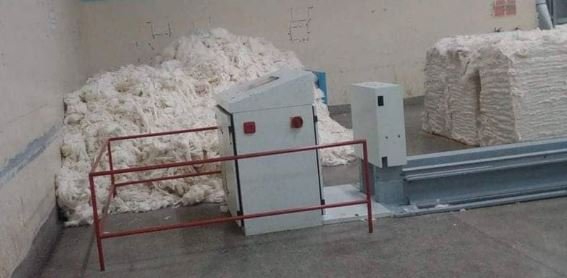
Importance of Mixing and Blending
- To give the required characteristics to the end product.
- To compensate for variation in the characteristics of the raw materials.
- To hold down raw material cost.
- To achieve uniform quality.
- To use waste cotton in mixing.
- To meet functions and end-use requirements.
Lint
The seed-free cotton, which is gotten after ginning, is called lint.
Linters
After ginning some short fibres remain with the surface of the cotton seed, which is called linters.
Bale Management
The choice of cotton bales according to the fibre characteristics in order to achieve acceptable and economical processing conditions and a constant yarn quality is called bale management.
Objects of Bale Management
- An evening out of the quality characteristics of a yarn.
- A mean of avoiding quality jumps.
- A possibility of reducing cost as a result of an improved knowledge of the fibre characteristics.
You may also like: Processing Flowchart of Cotton Yarn Manufacturing
Mixing =???
When I initially commented, I clicked the “Notify me when new comments are added” checkbox and now each time a comment is added I get several emails with the same comment. Is there any way you can remove people from that service? Thanks.
It’s not boring when you write about it.. out of every blog on this, yours is the best.
Your articles are extremely helpful to me. Please provide more information!